Our Planetary Mirror

Author & Scholar · Planetary Thought

Boris
Shoshitaishvili

Our Planetary Mirror

Earth Science and the Reimagining of Humanity

University of Chicago Press · October 2026

Bringing together the natural sciences, humanities, and social sciences to examine how humans understand their relationship to the planet.
About the Book

Our Planetary Mirror

Earth Science and the Reimagining of Humanity

A philosophical analysis of three scientific visions of humanity: the noosphere, the Anthropocene, and Gaia theory.

How can we explain humanity's unique relationship to the Earth? Our Planetary Mirror considers the three major ways earth scientists have answered this question: the noosphere (humans as a layer of thought and culture covering the earth), the Anthropocene (humans as a geological force), and the Gaia hypothesis (humans as part of a superorganism comprising life on Earth).

Tracing the metaphors at the heart of each framework through their ancient predecessors — Babylonian myth, Greek philosophy, Aztec metaphysics, medieval European theology — Shoshitaishvili develops fresh responses to pressing global issues such as geoengineering, artificial intelligence, and the balance between cosmopolitanism and intensified nationalism.

PublisherUniversity of Chicago Press
PublicationOctober 2026
Pages240

Introduction: Our Planetary Identity

PART I: SPHERES AND THE NOOSPHERE
1. From Cosmic to Planetary Spheres
2. The Utopian Noospheres of Pierre Teilhard de Chardin and Vladimir Vernadsky
3. Harmonizing the Technosphere, Infosphere, and Biosphere into a Noosphere

PART II: FORCES AND THE ANTHROPOCENE
4. The Mythopoetics of Force
5. The Latent Ambivalence of Force in Modern Science
6. Human Force on the Earth System in the Anthropocene

PART III: COLLECTIVE BODIES AND GAIA
7. Ancient Collective Embodiment
8. Collective Solipsism and the Body Politic
9. Gaia and the Three Generations of the Planetary Body

Conclusion: From Planet to Polis and Mythos

Pre-order from U of C Press →
Our Planetary Mirror

Three Visions of
Planetary Humanity

Each paradigm positions human beings in a specific planetary context — underpinned by an ancient metaphor and its poetry — offering a different image of who we are in relation to Earth.

The Noosphere

Sphere of Mind

Humans understood as a planetary layer of thought and culture — an envelope of intelligence and technology emerging over the biosphere. Rooted in the work of Vernadsky and Teilhard de Chardin, and in ancient traditions of cosmic harmony.

The Anthropocene

Geological Force

Humanity as a titanic geological force destabilizing an ancient Earth system — with deep roots in the metaphysics of force, from Aristotelian physics to the forces of modern science. Urgent and politically charged.

Gaia Theory

Collective Body

Life on Earth as a self-regulating superorganism — and humanity as its ambivalent member, from wayward parasite to budding nervous system. Ancient traditions of collective embodiment underlie its deepest intuitions.

Essays & Articles

Selected Writing

Public Writing

Noema Magazine · 2023

The Poetry of Planetary Identity

A précis of the book's central argument: how the noosphere, Anthropocene, and Gaia each offer poetic visions — rooted in ancient metaphor — of humanity's place in the Earth system.

Noema Magazine

The New Planetary Nationalism

Examining the tension between emergent planetary consciousness and the intensification of nationalism — and what planetary thought offers to our political moment.

Counterpoint Knowledge · 2023

Narrative Warfare and the Noosphere in Steve Bannon's Populist Revolt

How the concept of the noosphere illuminates the politics of information warfare and populist movements in the contemporary infosphere.

Berggruen Institute

Planetary Metaphysics (Essay in edited volume)

A contribution to the Berggruen Institute's volume on planetary thought, exploring the metaphysical dimensions of human–Earth relationships.

Academic Publications

Earth's Future · AGU · 2021

From Anthropocene to Noosphere: The Great Acceleration

Tracing the conceptual arc from the Anthropocene — humanity as geological force during the Great Acceleration — toward the noosphere as a potential reframing of humanity's planetary role.

The Anthropocene Review · 2020

Deep Time and Compressed Time in the Anthropocene

Theorizes the "new timescape" produced by the simultaneous expansion of deep time and compression of lived experience through techno-social acceleration, and evaluates the cosmic stories available to help navigate it.

The Anthropocene Review · 2022

Is Our Planet Doubly Alive? Gaia, Globalization, and the Anthropocene's Planetary Superorganisms

Argues that the Earth's surface may now be home to two distinct planetary superorganisms: the ecological superorganism of Gaia and the sociological superorganism of globalized humanity.

The Anthropocene Review · 2023 · Co-authored

The Meanings of the Critical Zone

Co-authored with Raymond M. Lee, Rachel L. Wood, Jeremy Bekker, and Benjamin W. Abbott. Examines how the Critical Zone concept has expanded into ontological, epistemic, and anthropocenic meanings.

About

Boris
Shoshitaishvili

Boris Shoshitaishvili is an author, editor, and former USC-Berggruen Fellow with a background in evolutionary biology, comparative literature, and classical studies. His work brings together the natural sciences, humanities, and social sciences to examine how humans understand their relationship to the planet.

His first book, Our Planetary Mirror: Earth Science and the Reimagining of Humanity, is forthcoming in the fall of 2026 with the University of Chicago Press. An interdisciplinary volume he edited, Planetary Metaphysics, is under contract with Indiana University Press.

He has published in The Anthropocene Review, Earth's Future, Noema, Counterpoint, Ageing Research Reviews, and The Journal of Vertebrate Paleontology.

He completed a postdoctoral fellowship in UC Berkeley's Anthropology Department after earning his Ph.D. in Comparative Literature from Stanford University.

  • Postdoctoral Fellowship

    UC Berkeley · Anthropology

  • Ph.D. · Comparative Literature

    Stanford University

  • M.A. · Classics

    University of Arizona

  • Sc.B. Biology · A.B. Classics

    Brown University

  • USC-Berggruen Fellow

    Berggruen Institute · 2022–2024

Edited Volume

Under Contract

Planetary Metaphysics

Scientific, Religious, and Philosophical Perspectives on the Human-Earth Relationship

An interdisciplinary edited volume gathering scholars from across the sciences, humanities, and philosophy to explore the deepest dimensions of humanity's relationship to Earth.

Indiana University Press

"Planetary thought asks us not just how humans have changed the Earth, but how the Earth — its deep time, its living systems, its ancient myths — has changed what we think it means to be human."

— Boris Shoshitaishvili

Speaking

Talks & Presentations

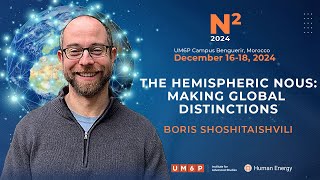
N2 Conference 2024 · Human Energy & UM6P

The Hemispheric Nous: Making Global Distinctions against the Backdrop of the Noosphere

How the noosphere's utopian promise must be rethought in light of geopolitical fracture and disinformation.

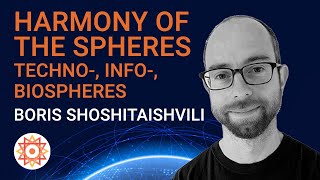
N2 Conference 2023 · UC Berkeley

The Noosphere and the Harmony of the Spheres: Bringing Techno-, Info-, and Biospheres into Alignment

On the ancient musical metaphor of harmonious spheres and its contemporary relevance for planetary coherence.

AMA · Online Event

The Role of Narrative & Pluralism in the Noosphere

A live conversation on how narrative shapes our collective understanding of planetary thought, and why pluralism matters for political and ecological action.

USC Berggruen Institute

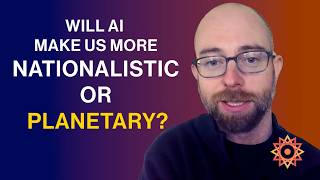
2030 Scenarios: Will AI Make Us More Nationalistic or Planetary?

Exploring two divergent futures for AI's relationship to planetary identity and nationalism.